For decades, the Indian retirement dream followed a predictable, almost sacred script. You worked a steady job, lived frugally, and poured every spare rupee into two things: your children’s education and building a family home.
The home wasn’t just an asset; it was a fortress of security and a gift for the next generation. The plan was simple: you take care of the kids, and eventually, the kids take care of you.
But life in modern India is changing. Sometimes the kids struggle to find their own footing in a competitive economy. Sometimes they move halfway across the world. And sometimes, heartbreakingly, they aren’t there to provide the support you expected. If you find yourself “house rich but cash poor,” there is a financial tool designed specifically for this chapter of life: Reverse Mortgage.
The Silent Struggle Of The Asset-Rich Retiree
Imagine a couple living in a beautiful three-bedroom apartment in Hyderabad. It’s worth ₹1.5 crores today. However, their monthly income consists of a modest pension and some interest from Fixed Deposits that barely keeps up with rising medical bills and grocery prices.
They are sitting on a goldmine, but they can’t “eat” the bricks. They don’t want to sell because this is their home—filled with memories and a sense of belonging. This is where a Reverse Mortgage changes the game.
What Exactly Is A Reverse Mortgage?
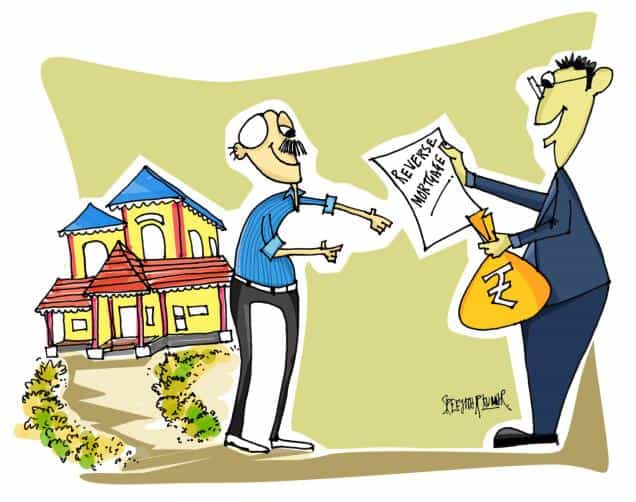
In a standard home loan, you pay the bank every month to eventually own the house. In a Reverse Mortgage, the bank pays you every month based on the value of the house you already own.
The best part? You continue to live in your home for the rest of your life. You don’t have to pay back the loan as long as you are living there. The loan is typically settled only after the last surviving spouse passes away, usually by selling the property or having the heirs pay off the debt to keep the house.
The Simple Math: Turning Bricks Into Monthly Income
Let’s look at how the numbers might work for a typical senior couple (without the need for a spreadsheet).
1. Property Value: ₹1 Crore.
2. Bank Margin: Banks usually lend about 60% to 75% of the value. Let’s say ₹60 Lakhs is the sanctioned limit.
3. The Payout: Instead of taking ₹60 Lakhs in one go, the bank agrees to pay a monthly “annuity” or installment.
4. The Result: Depending on the interest rate and the tenure (often up to 15 or 20 years), the couple could receive roughly ₹20,000 to ₹30,000 every single month.
This “annuity generator” acts like a self-made pension. It ensures that the electricity bills are paid, the fridge is full, and medical emergencies don’t require “asking” anyone for help.
Why This Is The Ultimate Safety Net For Indian Parents
In our culture, we often feel guilty about “using up” the inheritance. But consider this: your children would much rather see you living a dignified, independent, and comfortable life than inheriting a house at the cost of your struggle.
A Reverse Mortgage is a way to treat your home as a living asset. It bridges the gap when:
- Children are struggling with their own finances or are underachievers.
- The rising cost of healthcare outpaces old savings.
- You want to maintain your lifestyle without being a “burden.”
Your Home, Your Dignity
The “Settled Child Dream” is a beautiful sentiment, but financial independence is a reality you can control. According to the National Housing Bank, these loans are specifically designed for senior citizens to provide a social security net. Your home supported your family while you were working; now, let it support you while you are resting. You’ve built the asset—now it’s time to let the asset build your peace of mind.